

Meenakshi Sundareswarar Temple
· Madurai Main, Madurai, Tamil Nadu 625001, India
01 · Image
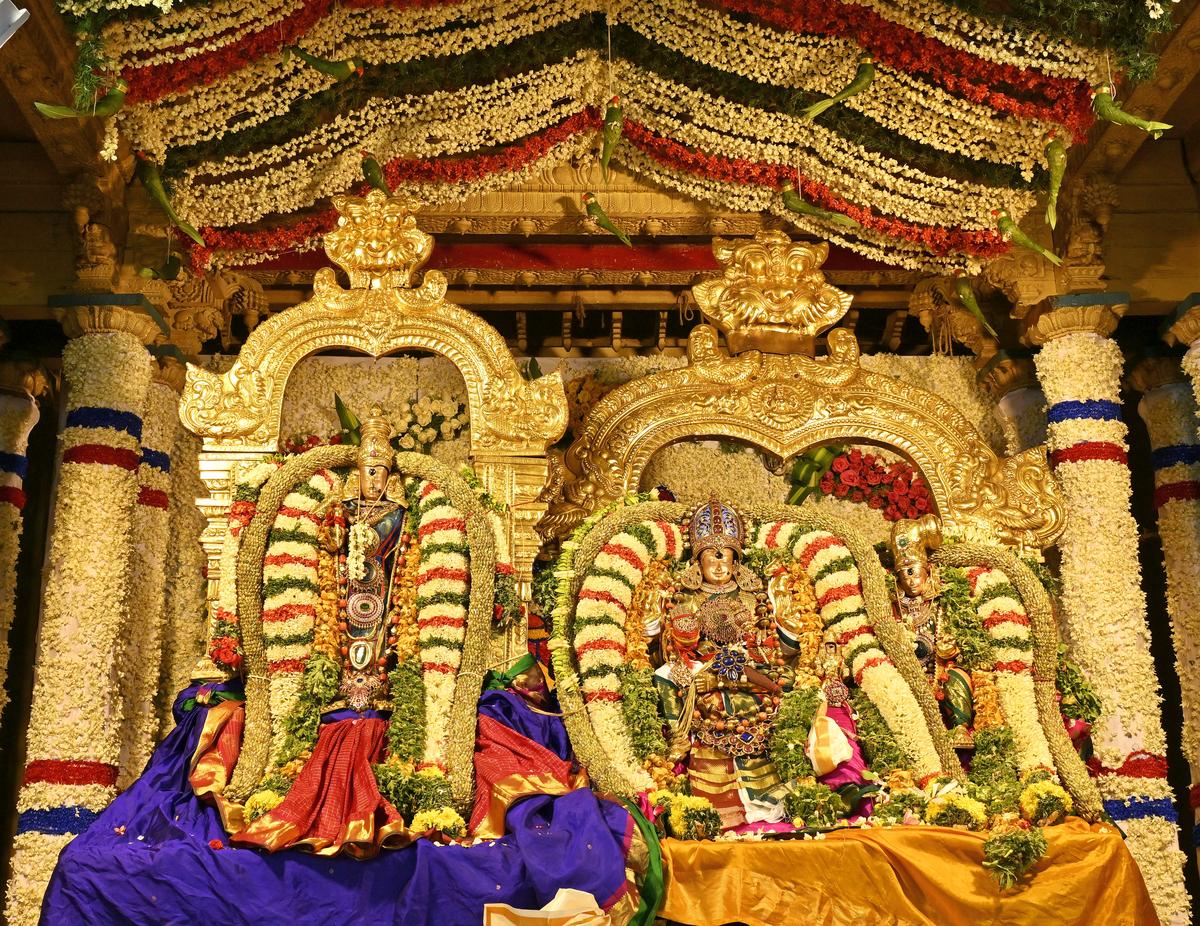 Plate shown — 3 680 × 1 760
01 / 03
Gallery ·Scroll
02Summary
The Meenakshi Sundareswarar Temple in Madurai, Tamil Nadu, is a premier monument of Dravidian architecture dedicated to Goddess Meenakshi and Lord Sundareswarar..
The Meenakshi Sundareswarar Temple, situated near the southern bank of the Vaigai River in Madurai, Tamil Nadu, stands as one of the most prominent and venerated Hindu temple complexes in India. Serving as the cultural and spiritual heart of the historic city of Madurai, the complex covers approximately 45 acres and attracts millions of pilgrims and heritage enthusiasts annually.
Geographically positioned in the heart of Madurai (PIN 625001), the temple complex forms the central focal point around which the ancient city's street layout was traditionally organized in concentric squares. The temple is listed under the administration of the Hindu Religious and Charitable Endowments (HR&CE) Department of the Government of Tamil Nadu. Beyond its deep devotional importance, the temple is recognized globally for its artistic grandeur, intricate relief carvings, and towering gateway pyramids (gopurams) that dominate the city's skyline.
The principal deities of the temple are Goddess Meenakshi, a form of Parvati, and her consort Lord Sundareswarar, a form of Shiva. Unusually for traditional South Indian temple complexes, primary ritual precedence and devotion are accorded to the goddess. Traditional protocol dictates that worshippers visit the shrine of Goddess Meenakshi before proceeding to the shrine of Lord Sundareswarar.
The sanctum sanctorum of Goddess Meenakshi houses a dark stone icon of the deity depicted holding a green parrot in her right hand, symbolizing grace and knowledge. The name Meenakshi traditionally translates to 'fish-eyed', a classical poetic metaphor describing eyes shaped like fish, symbolizing eternal vigilance and care over her devotees. Lord Sundareswarar, meaning 'the Handsome Lord', is worshipped in the form of a Shiva Lingam within a adjacent primary sanctum guarded by a brass-plated flagstaff and grand stone sculptures.
The temple is renowned for its annual festival, Chithirai Thiruvizha (celebrated in April–May), which commemorates the celestial wedding (Thirukalyanam) of Goddess Meenakshi and Lord Sundareswarar. This festival draws hundreds of thousands of devotees to witness the ceremonial divine union and chariot processions.
The historical roots of the Meenakshi Sundareswarar Temple extend deep into antiquity, with literary references present in ancient Tamil Sangam works dating to the early centuries of the Common Era. The city of Madurai and its central deity are celebrated in classical Tamil literature, including the epic Silappatikaram and the devotional hymns of the Nayanmars compiled in the Tevaram.
Historical inscriptions document significant expansion and stone construction during the medieval Pandyan dynasty. Rulers such as Sadayavarman Sundara Pandyan I (13th century) raised major structures and gateway towers within the complex. In 1310–1311 CE, the temple suffered extensive damage during the military campaigns of Malik Kafur, commander under the Delhi Sultanate, resulting in the plundering of its wealth and partial destruction of its outer structures.
The temple was systematically restored and expanded to its present grand scale following the establishment of the Vijayanagara Empire and the rise of the Madurai Nayak dynasty in the 16th and 17th centuries. Ruler Vishwanatha Nayak and his prime minister Ariyanatha Mudaliar laid the foundations for the modern layout. Later, King Thirumalai Nayak (1623–1659 CE) completed major architectural expansions, including extensive pillared halls and gateway towers, creating the monumental complex visible today.
The Meenakshi Sundareswarar Temple is a masterpiece of Dravidian temple architecture. The complex is enclosed by massive stone perimeter walls and features 14 monumental gateway towers (gopurams). The tallest of these is the Southern Tower (Tekku Gopuram), reaching a height of approximately 170 feet (52 meters), adorned with thousands of painted stucco figures depicting deities, mythical beings, and legendary narrative scenes.
At the center of the complex lies the Porthamarai Kulam (Golden Lotus Tank), an ancient sacred water body surrounded by pillared corridors decorated with 17th-century murals depicting the divine miracles (Thiruvilaiyadal) of Lord Shiva. The tank historically served as a meeting place for Tamil literary scholars of the Sangam assembly.
A notable architectural feature is the Aayiram Kaal Mandapam (Hall of Thousand Pillars), constructed in 1569 by Ariyanatha Mudaliar. The hall actually contains 985 carved granite pillars, each sculpted with detailed iconographic figures of gods, goddesses, and mythical creatures. Near the hall entrance stand five musical pillars carved out of single granite stones that produce different musical tones when gently struck. The temple also houses several other pillared halls, including the Pudhumandapam, built by Thirumalai Nayak, which displays exquisite relief carvings of Nayak rulers and puranic events.
04 · Divinity
Temple Deities
- 01Meenakshi AmmanThe primary goddess of the temple, traditionally worshipped first before visiting Sundareswarar.Presiding Deity
- 02SundareswararSwayambhu Lingam representing Shiva as the divine consort of Meenakshi.Presiding Deity
- 03Mukkuruni VinayagarFamous massive single-stone idol of Ganesha located between the Meenakshi and Sundareswarar sanctums.Parivara Deity
- 04Muthukumara SwamyShrine located near the main sanctum of Lord Sundareswarar.Parivara Deity
- 05DakshinamurthySituated on the southern outer wall (Koshta) of the Sundareswarar sanctum.Koshta Deity
- 06BhairavarGuardian deity worshipped especially during nighttime closing rituals.Parivara Deity
05 · Additional Info
Heritagies, Information.
01 Period6th Century CE (Origins); 16th–17th Century CE (Present Structure).
02 DynastyPandya Dynasty, Madurai Nayak Dynasty.
03 StatusPaadal Petra Sthalam.
04 Sthala VrikshamKadamba Tree (Kadambam).
05 TheerthamPottramarai Kulam (Golden Lotus Tank).
06 AgamamKarana Agama, Kamika Agama.
Inscriptions
Inscriptions of Pandya, Vijayanagara, and Nayak rulers detailing land grants, temple maintenance, and festival protocols..
Cultural Significance
Primary deity shrine of Pandya Naadu Paadal Petra Sthalams, historic seat of the Third Tamil Sangam, and center for the annual Chithirai Thiruvizha festival..
Legends
Tiruvilaiyadal Puranam detailing 64 divine plays of Shiva; Divine marriage of Goddess Meenakshi and Lord Sundareswarar..
Transport Details
-
Railway Station
Madurai Junction Railway Station
Madurai Junction is the nearest railway station with connections across India. Auto-rickshaws, taxis, and city buses are readily available from the station to the temple..
Distance1.80 km
-
Bus Stand
Periyar Bus Stand
Nearest local bus terminal. Mini-buses, city buses, and auto-rickshaws frequently ply between Periyar Bus Stand and the temple..
Distance1.30 km
-
Bus Stand
Mattuthavani Integrated Bus Terminus (MIBT)
Primary long-distance intercity bus terminal in Madurai. Direct city buses and taxis connect Mattuthavani to Meenakshi Temple..
Distance8.50 km
-
Airport
Madurai Airport (IXM)
Nearest airport serving domestic and select international flights. Pre-paid cabs, app-based taxis, and auto-rickshaws are available to reach the temple directly..
Distance10.50 km
07 · Celebration
Festivals
Chithirai Thiruvizha
The grandest annual festival celebrating the Coronation (Pattabhishekam), Celestial Wedding (Thirukalyanam) of Goddess Meenakshi, and the Chariot/Car Festival (Ther Thiruvizha).
12 DaysAvani Moola Thiruvizha
Focuses on Lord Sundareswarar, reenacting His divine plays (Thiruvilaiyadal), most notably the 'Pittukku Mann Sumandha Leelai'.
10 DaysTheppotsavam (Float Festival)
Culminates on the full moon night (Thai Poosam) at the Mariamman Teppakulam tank, where the deities are taken on a magnificently illuminated float.
12 DaysNavaratri
Known for elaborate Kolu (doll displays) setup inside the temple and distinct daily alankarams for Goddess Meenakshi.
10 DaysAadi Mulaikottu Festival
Dedicated exclusively to Goddess Meenakshi, featuring sprouting of nine grains (Mulaipari) and grand carnatic musical performances.
10 Days
