
Thillai Nataraja Temple, Chidambaram
· South Car Street, Chidambaram, Cuddalore District, Tamil Nadu - 608001, India
01 · Image
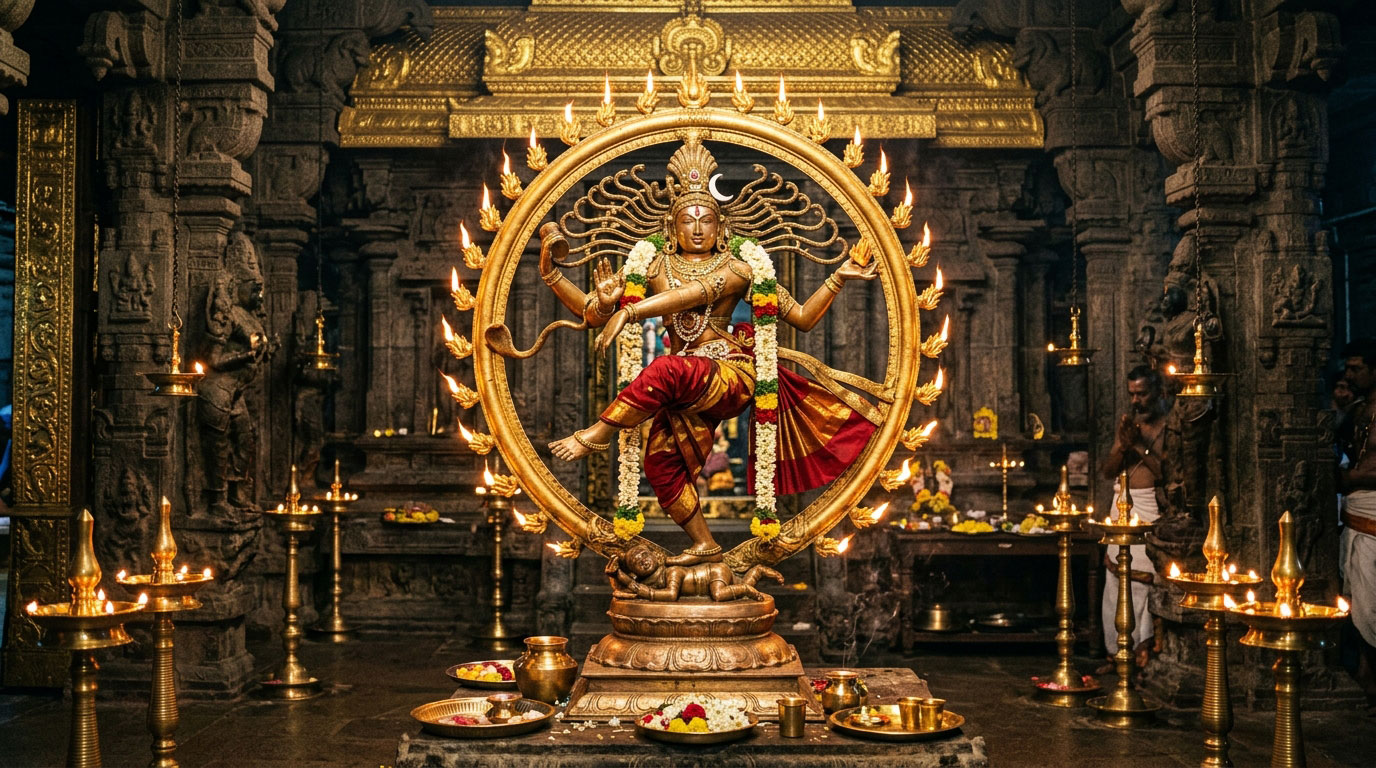 Plate shown — 3 680 × 1 760
01 / 07
Gallery ·Scroll
02Summary
The Thillai Nataraja Temple in Chidambaram is one of the most prominent Hindu temples dedicated to Lord Shiva in his manifestation as Nataraja, the Cosmic Dancer. As the Akasha (Ether) element among the Pancha Bhoota Sthalas, it occupies a central place in Saiva Siddhanta tradition and South Indian temple architecture..
The Thillai Nataraja Temple is located in the heart of Chidambaram town in the Cuddalore district of Tamil Nadu. Spread across an expansive complex of approximately 40 acres, the temple is one of the ancient and venerated pilgrimage centers of South India. The town's historic name, Thillai, derives from the dense groves of mangrove trees (Excoecaria agallocha) that once surrounded the region.
In Tamil Saivite tradition, Chidambaram holds a unique position; when devotional literature refers simply to Koyil (the Temple), it specifically signifies the Chidambaram Nataraja Temple. The temple represents the Akasha Sthalam (the element of Ether or Space) among the Pancha Bhoota Sthalas—the five sacred shrines representing the fundamental physical elements. It is also one of the 275 Paadal Petra Sthalams, glorified in the 7th–8th century devotional hymns of the Nayanars in the Tevaram canon.
The temple administration has traditionally been managed by the Podu Dikshitars, a specialized hereditary community of Saivite priests who follow unique Vedic rituals and liturgies distinct from the Agama-based practices prevalent in most other Tamil Nadu temples.
Unlike most Shiva temples where the primary icon in the sanctum is a stone Lingam, the principal deity of Chidambaram is Lord Shiva depicted in the form of Nataraja performing the Ananda Tandava (the Dance of Cosmic Bliss). The image is cast in bronze and housed within the sacred Chit Sabha (Hall of Consciousness).
Alongside Nataraja stands his consort, Goddess Sivakamasundari (Parvati). Within the Chit Sabha, Shiva is worshiped in three distinct states of manifestation:
- Sakala (Form): Represented by the anthropomorphic bronze image of Nataraja.
- Sakala-Nishkala (Form-Formless): Represented by the Chandramoulisvara crystal Lingam, which undergoes daily ritual ablutions (abhishekam).
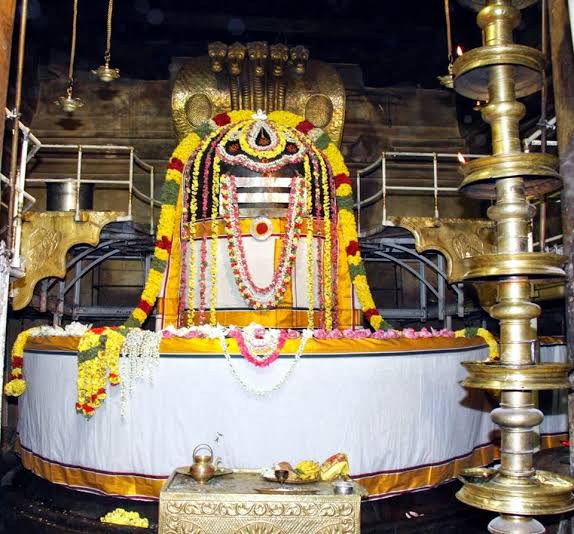
- Nishkala (Formless): Represented by the celebrated Chidambara Rahasyam (Secret of Chidambaram). Located to the right of the main image, a curtain is drawn aside during worship to reveal empty space adorned with a garland of golden vilva leaves, symbolizing the formless, omnipresent Divine Consciousness inhabiting the space of the human heart.
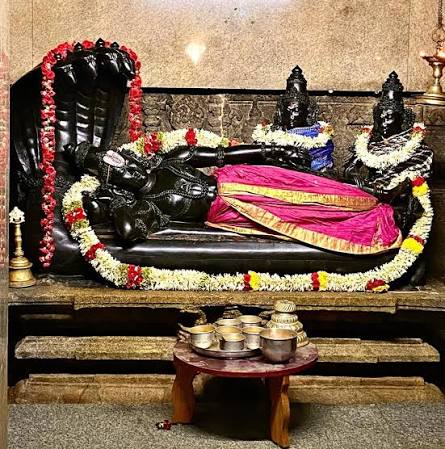
Uniquely, the temple complex also houses the Govindaraja Perumal shrine (Tillai Chitrakutam), one of the 108 Divya Desams glorified by the Alwar saints, where Lord Vishnu is enshrined in a reclining posture adjacent to the Shiva sanctum.
The origin of worship at Thillai is rooted in ancient traditions and oral legends involving the sages Patanjali and Vyaghrapada, who were granted the vision of Shiva's cosmic dance. Historical documentation begins to emerge during the early Pallava and Chola periods.
The temple enjoyed immense royal patronage under the imperial Chola dynasty (9th to 13th centuries CE). Chola monarchs regarded Lord Nataraja as their family deity (Kula Deivam). Epigraphic records indicate significant royal gifts and structural additions made by kings such as Parantaka I (who gilded the roof of the Chit Sabha with gold in the 10th century, earning the title Pon Veindha Cholan), Raja Raja I, Rajendra I, Kulottunga I, Vikrama Chola, and Kulottunga III.
Subsequent extensions, maintenance, and donations were made by the Later Pandyas, Vijayanagara rulers, and the Nayaka kings of Madurai and Thanjavur. During the Anglo-French conflicts in the 18th century, the temple compound served periodically as a fortified garrison, sustaining minor structural damages before undergoing restorative efforts in the 19th and 20th centuries.
The Thillai Nataraja Temple complex is a masterpiece of Dravidian architecture characterized by five concentric courtyards (prakarams) and five primary halls (sabhas):
- Chit Sabha: The innermost sanctum containing Nataraja, distinguished by its gold-plated slanting wooden roof.
- Kanaka Sabha: Located directly in front of the Chit Sabha, where daily rituals and offerings are performed.
- Deva Sabha: The hall housing the temple's processional deities (Utsava Murtis) and festival bronzes.
- Nitya Sabha: A hall sculpted in the form of a horse-drawn chariot, featuring intricate stone carvings.
- Raja Sabha: The monumental 1,000-pillared hall where historical celebrations and royal assemblies were held.
The temple features four massive outer gateway towers (Gopurams) facing the cardinal directions, rising to heights of over 40 meters. The Eastern Gopuram is particularly renowned for its interior stone wall panels depicting all 108 dance poses (Karanas) described in Bharata Muni's classical treatise, the Natya Shastra. The temple complex also includes the large sacred water tank known as Sivaganga and the shrine dedicated to Goddess Sivakamasundari, which features exquisite ceilings adorned with Nayaka-period paintings.
04 · Divinity
Temple Deities
- 01Nataraja (Thillai Koothan / Sabhanayagar)Ananda Tandava form representing the Akasa (Ether) element among Pancha Bhoota Sthalams.Presiding Deity
- 02ChandramouleeswararCrystal Lingam worshipped during six daily kala poojas.Presiding Deity (Sphatika Lingam)
- 03Sivagami (Sivagamasundari)Located in a separate major shrine within the temple complex.Consort
- 04Govindaraja PerumalReclining posture (Thiru Chitrakootam), co-located within the Nataraja temple precinct.Shrine Deity (Divya Desam)
- 05Mukkuruni VinayakarLarge single-stone idol of Lord Ganesha.Parivara Deity
- 06Muthukumara SwamyShrine located near the temple tank (Sivaganga).Parivara Deity
- 07Swarnakarshana BhairavarWorshipped for prosperity and protection.Parivara Deity

05 · Additional Info
Heritagies, Information.
01 Period10th–13th century CE (origins prior to 7th century CE).
02 DynastyChola, Pallava, Pandya, Vijayanagara.
03 StatusPaadal Petra Sthalam, Pancha Bhoota Sthalam (Akasha).
04 Sthala VrikshamThillai tree (Excoecaria agallocha).
05 TheerthamSivaganga Theertham, Paramananda Koobam.
06 AgamamVaidika (Patanjali Puja Vidhi).
Inscriptions
Records of Chola, Pandya, and Vijayanagara dynasties documenting grants, temple additions, and gold gilding of the Kanaka Sabha..
Cultural Significance
Represents the element Akasha (Ether/Sky); central shrine for Shiva's cosmic dance (Ananda Tandavam); seat of Chidambara Rahasya..
Legends
Shiva performed the Ananda Tandavam for sages Patanjali and Vyagrapada and defeated Goddess Kali in a divine dance contest..
Transport Details
-
Railway Station
Chidambaram Railway Station
Located approximately 2 km from the Nataraja Temple. Regular trains connect Chidambaram with Chennai, Puducherry, Tiruchirappalli, and Tanjore. Auto-rickshaws and taxis are easily available outside the station..
Distance2.00 km
-
Bus Stand
Chidambaram Central Bus Stand
Located about 1.5 km from the temple. Government (TNSTC/SETC) and private buses regularly operate connecting Chidambaram to Chennai, Puducherry, Cuddalore, Tanjore, and Trichy..
Distance1.50 km
-
Airport
Puducherry Airport
The nearest airport with limited domestic operations is Puducherry Airport (~67 km). For major domestic and international connections, Tiruchirappalli International Airport (approx. 170 km) or Chennai International Airport (approx. 215 km) can be used..
Distance67.00 km
07 · Celebration
Festivals
Aani Thirumanjanam
One of the two primary 10-day Brahmotsavams at the temple. It features the grand chariot (Rathotsavam) procession on the 9th day and the Maha Abhishekam (holy bath) of Lord Nataraja and Goddess Sivagamasundari at the Rajasabha on the 10th day.
10 DaysArudra Darisanam
A major 10-day Brahmotsavam celebrating the celestial dance of Nataraja during the star Thiruvathirai. Includes a car festival on the 9th day and the sacred Arudra Darisanam holy bath and procession on the 10th day.
10 DaysNatyanjali Dance Festival
A world-renowned annual classical dance festival where dancers from across India offer their performances to Lord Nataraja, the cosmic dancer, starting on the night of Maha Shivaratri.
5 DaysMaha Shivaratri
Observed with special four-kala pujas through the night, sacred chanting, and intense devotional rituals dedicated to Shiva.
1 DaysTemples, relatedMore on the view