


Sri Karpaga Vinayagar Temple, Pillayarpatti
· P.K. Koil Road, Pillayarpatti, Sivagangai District, Tamil Nadu 630207, India
01 · Image
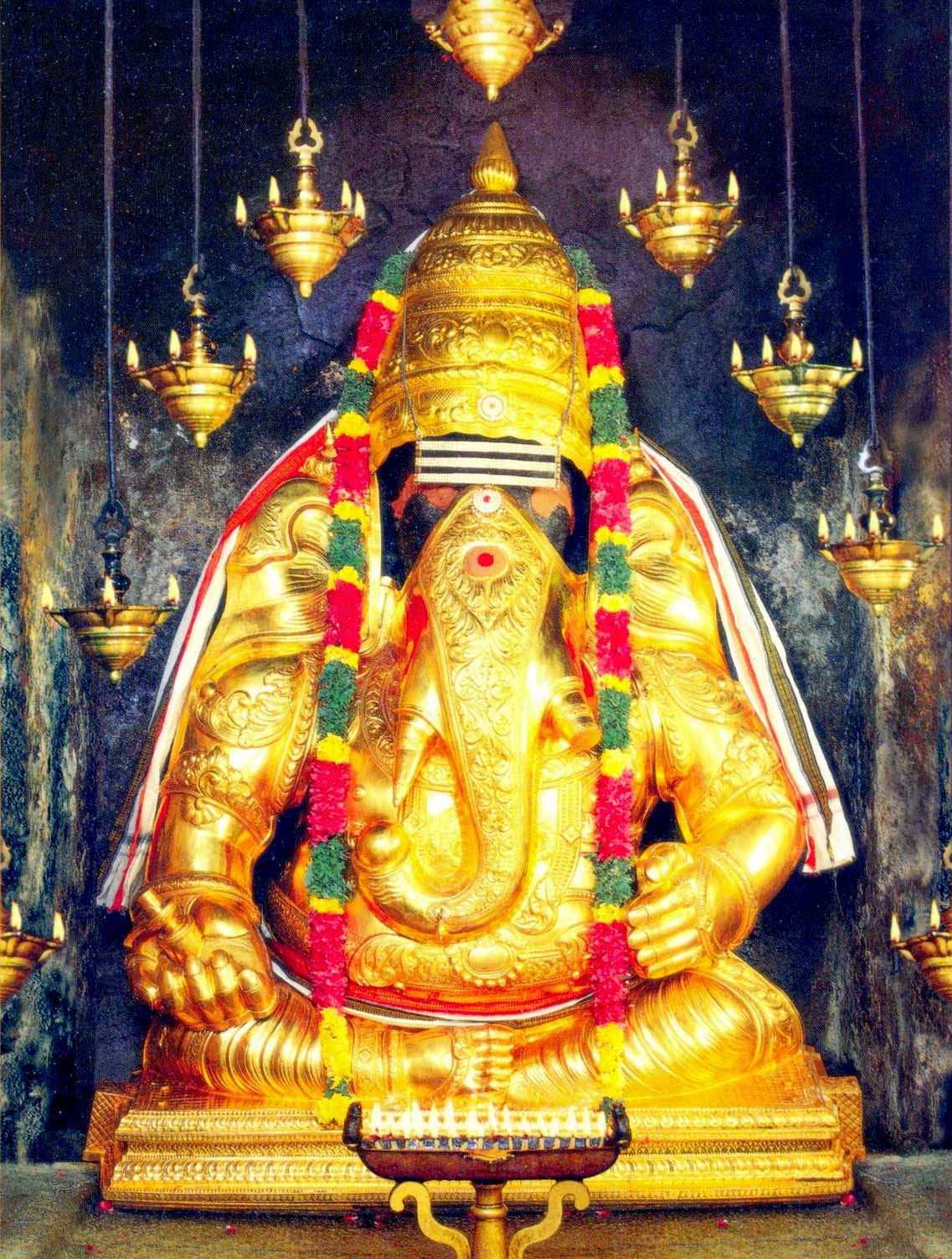 Plate shown — 3 680 × 1 760
01 / 05
Gallery ·Scroll
02Summary
Sri Karpaga Vinayagar Temple in Pillayarpatti is an ancient rock-cut cave shrine in Tamil Nadu's Sivagangai district, celebrated for its unique 6th-century Valampuri Ganesha relief carved directly into the living rock..
Sri Karpaga Vinayagar Temple, located in Pillayarpatti village of Sivagangai district, Tamil Nadu, is one of the oldest surviving rock-cut cave temples in South India. Situated between Pudukkottai and Karaikudi in the Chettinad region, the temple serves as a central spiritual hub for pilgrims across the state and beyond.
The settlement of Pillayarpatti takes its name from the presiding deity, Pillaiyar (a venerated Tamil term for Lord Ganesha). Unlike many modern temple complexes, the core sanctum of this shrine is carved directly into the interior rock face of a small hillock, preserving ancient cave architecture alongside extensive structural expansions added by later patrons.
The main deity of the temple is Sri Karpaga Vinayagar, a magnificent six-foot bas-relief figure carved out of the cave wall. He is depicted as Valampuri Vinayagar, meaning his trunk turns towards his right side—a feature considered especially auspicious in Hindu iconographic tradition.
Unlike typical representations of Ganesha featuring four arms, the Karpaga Vinayagar icon has only two arms, holding a modaka (sweet offering) in his right hand. His left hand rests near his waist. The iconographic style reflects early post-Gupta and Early Pandya artistic practices. The name 'Karpaga' derives from the celestial Karpaga Vriksha (wish-fulfilling tree), symbolizing the deity's benevolent nature in fulfilling the prayers of devotees.
The cave sanctuary also houses a rock-cut Lingam representing Lord Shiva, worshiped here under the name Thiruveesar (or Marudeeswarar).
Based on paleographic analysis of inscriptions found within the cave sanctum, scholars and epigraphists date the initial excavation of the Pillayarpatti cave to the Early Pandya period, between the 5th and 7th centuries CE. An early Tamil-Brahmi and Vatteluttu inscription inside the cave mentions 'Ekkattoor Koon Peruparanan', believed to be the sculptor or guild leader responsible for executing the rock carvings.
During the late 19th and 20th centuries, the temple underwent substantial restoration and expansion under the patronage of the Chettinad Nagarathar community. Today, the temple complex is managed by a hereditary trust of the Nagarathar community, who maintain the rituals, heritage buildings, and public facilities surrounding the historic rock-cut core.
The temple exhibits a distinct combination of Early Pandya rock-cut cave design and later medieval structural additions. The primary cave facade faces north, with the inner cave chamber housing the rock reliefs of Karpaga Vinayagar and Shiva.
Surrounding the early rock-cut core are extensive modern and medieval mandapams (pillared halls), a prominent main gopuram (gateway tower), and administrative quarters. Additional rock bas-reliefs within the cave system depict deities such as Harihara, Lingodbhava, and Chandikeswara, showcasing early Dravidian artistic nuances. The temple complex also includes a large sacred water tank, locally referred to as the temple Oorani.
04 · Divinity
Temple Deities
- 01Karpaga Vinayagar6-foot tall rock-cut deity carved inside the cave facing North with trunk turned right (Valampuri)Presiding Deity
- 02ThiruveesarAlso known as Valaroli Nathar or Marudheesar; rock-cut Shiva Lingam in the central cave sanctumPresiding Deity
- 03Sivagami AmmanSeparate shrine present within the temple complexConsort
- 04GajalakshmiBas-relief carving on the rock wall inside the cave reliefKoshta Murthi
- 05BhairavarAncient rock-cut sculpture near the cave entranceParivara Devata

05 · Additional Info
Heritagies, Information.
01 Period6th century CE.
02 DynastyEarly Pandya Dynasty.
03 StatusAncient Rock-Cut Cave Temple.
04 Sthala VrikshamVilvam.
05 TheerthamGarga Theertham.
06 AgamamSaiva Agamam.
Inscriptions
5th-6th century CE Vatteluttu inscriptions identifying sculptor Echchiruvalikkonattu Perunthachan and historic place name Erukkattur..
Cultural Significance
Prominent rock-cut cave temple featuring a 6-foot Valampuri (right-turned trunk) Ganesha carved directly out of stone..
Legends
Sage Garga performed penance here to obtain divine grace; deity bestows boons like the celestial Karpagam tree..
Transport Details
-
Railway Station
Karaikudi Junction Railway Station
Karaikudi Junction is the nearest major rail hub. Taxis, auto-rickshaws, and local town buses operate frequently from the station to Pillayarpatti..
Distance13.50 km
-
Railway Station
Devakottai Road Railway Station
A smaller nearby station where select passenger trains stop. Local transit to the temple is available..
Distance9.50 km
-
Bus Stand
Pillayarpatti Bus Stop
Town buses running along the Karaikudi-Tirupathur route drop passengers directly near the temple entrance..
Distance0.50 km
-
Bus Stand
Tirupathur Bus Stand
Major mofussil bus hub connecting to local buses and taxis bound for Pillayarpatti..
Distance12.00 km
-
Airport
Tiruchirappalli International Airport (TRZ)
The nearest international airport. Visitors can hire direct taxis or take buses via Pudukkottai to reach the temple..
Distance85.00 km
-
Airport
Madurai Airport (IXM)
Alternative major airport. Direct cab services and buses via Melur/Tirupathur connect Madurai Airport to Pillayarpatti..
Distance90.00 km
07 · Celebration
Festivals
Vinayagar Chaturthi
The temple's premier annual festival starting on Avani Hastham star with flag hoisting; features Gajamukhasura Samharam, a major Car Festival (Therottam) on the 9th day, and Santhana Kappu (sandal paste alankaram) on the 10th day.
10 DaysChithirai Vishu (Tamil New Year)
Special abhishekam, grand decorative alankaram, and continuous pujas mark the start of the Tamil New Year.
1 DaysMargazhi Thiruvathirai
Observed with early morning special pujas, sacred chanting, and grand processions dedicated to Lord Nataraja and Lord Vinayagar.
10 Days
