

Brihadeeswarar Temple, Thanjavur
· Membalam Road, Balaganapathy Nagar, Thanjavur, Tamil Nadu 613007, India
01 · Image
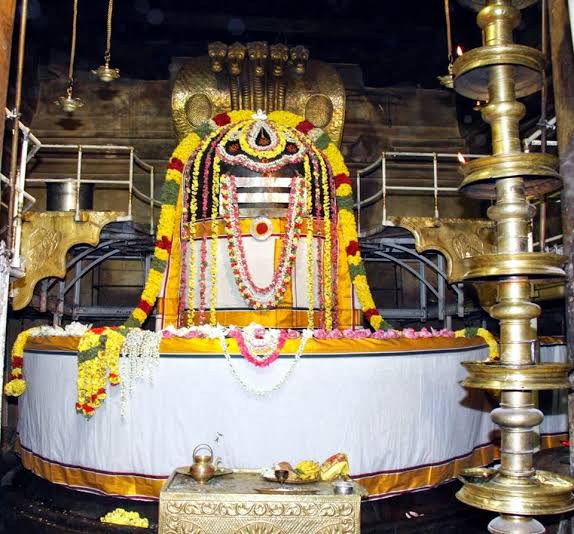 Plate shown — 3 680 × 1 760
01 / 06
Gallery ·Scroll
02Summary
The Brihadeeswarar Temple in Thanjavur, also known as Rajarajeswaram and Peruvudaiyar Kovil, is an 11th-century Chola-era monument dedicated to Lord Shiva and a designated UNESCO World Heritage Site..
The Brihadeeswarar Temple, locally known as Peruvudaiyar Kovil or Tanjore Big Temple, stands in Thanjavur, Tamil Nadu. Built under the royal patronage of Chola Emperor Rajaraja I and consecrated around 1010 CE, this temple represents one of the ultimate achievements of Dravidian temple design.
Designated as a UNESCO World Heritage Site under the grouping "Great Living Chola Temples," the complex remains an active center of worship and a monument of supreme cultural, architectural, and historical significance. Located within a fortified enclosure near the Grand Anicut canal system in the fertile Cauvery delta, the temple complex continues to draw pilgrims and scholars worldwide.
The sanctum sanctorum houses the primary deity, Lord Shiva, worshipped as Peruvudaiyar (the Great Lord) or Brihadeeswarar. The central icon is a monolithic Shiva Lingam standing over 3.7 meters (12 feet) high, resting upon a massive monolithic yoni base.
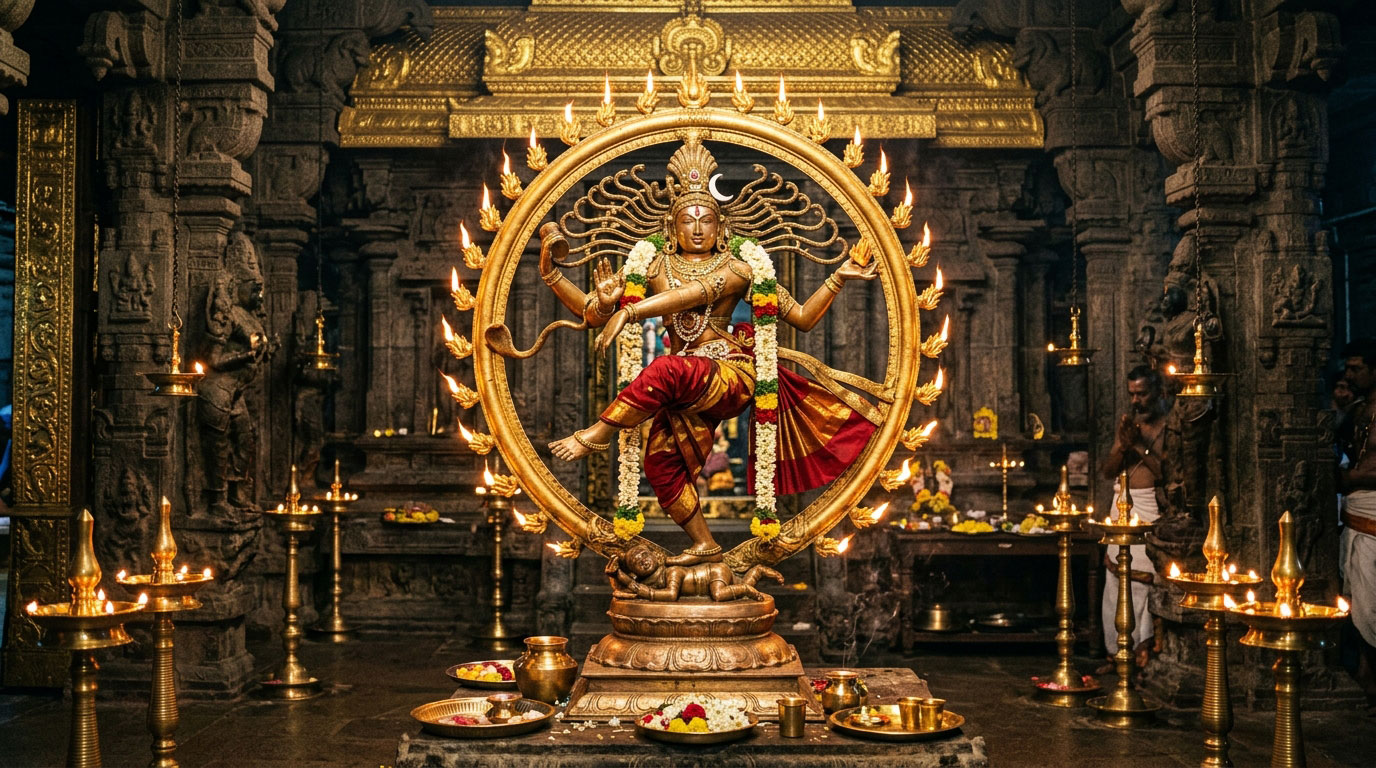
Associated shrines within the precinct honor the divine consort Parvati (worshipped as Periya Nayaki / Brihannayaki), Subrahmanya, Ganesha, and Sabhapati (Nataraja). Positioned in front of the main sanctum is a large Nandi mandapam housing a single-block granite Nandi (sacred bull) measuring approximately 16 feet in length and 13 feet in height, installed predominantly during the Nayak period to replace an earlier Chola-era Nandi.
Documented History: Inscriptions incised on the stone plinth of the primary shrine document that King Rajaraja I ordered the temple's construction, completing it in the 25th year of his reign (1010 CE). The epigraphs provide comprehensive administrative and historical details, listing royal donations of gold, silver, bronze icons, lands, and detailed assignments for hundreds of temple dancers (talippendugal), musicians, singers, accountants, and priests.
Subsequent dynasties, notably the Thanjavur Nayaks and the Thanjavur Marathas, added shrines, pillared halls (mandapams), decorative wall frescoes, and protective outer walls without altering the primary Chola architectural core.
Tradition and Legends: Devotional tradition holds that King Rajaraja I was inspired in a divine vision to build a monumental abode for Lord Shiva reflecting the cosmic order. Local tradition also suggests that the massive granite capstone (Kumbam) crowning the central tower was elevated using an inclined earth ramp extending several kilometers from a nearby village called Sarapallam, demonstrating extraordinary medieval engineering ingenuity.
The temple is built entirely of hard granite, a stone not naturally available in the immediate vicinity of Thanjavur, requiring transportation from nearby rock formations. The complex follows an axial symmetry along an east-west orientation within a spacious courtyard.
Architectural highlights include:
- Vimana: Known as the Srimad Vimana or Dakshina Meru, the tower rises to a height of 66 meters (216 feet) across 16 storeys, making it one of the tallest temple towers built in medieval India.
- Kumbam: The topmost monolithic granite block resting beneath the gilded kalasam weighs an estimated 80 metric tons.
- Gopurams: Entry into the compound is marked by two grand stone gateways—the Keralantakan Gopuram and the Rajarajan Gopuram—adorned with high-relief sculptures depicting Puranic narratives.
- Artistic Details: The upper ambulatory corridor of the main sanctum features stone carvings depicting 108 dance postures (karanas) described in the Natya Shastra, alongside 11th-century Chola frescoes portraying Shiva and King Rajaraja I with his guru Karuvurar.
04 · Divinity
Temple Deities
- 01BrihadeeswararAlso known as Peruvudaiyar or Rajarajeswaramudaiyar. Features one of the largest monolithic Shiva Lingams in the world.Presiding Deity
- 02PeriyanayakiAlso known as Brihannayaki. Housed in a separate shrine built during the Nayak period within the complex.Consort
- 03ChandrasekhararProcessional bronze deity taken out during festival celebrations.Utsavar
- 04Nartana GanapathyDancing pose of Ganesha situated on the southern wall of the outer sanctum.Koshta Murthi
- 05DakshinamurthyLocated on the southern wall niche of the main sanctum, depicting Shiva as the universal teacher.Koshta Murthi
- 06LingodbhavarPositioned in the western niche of the sanctum wall, depicting Shiva emerging from a pillar of fire with Brahma and Vishnu.Koshta Murthi
- 07BrahmaLocated on the northern wall niche of the main sanctum.Koshta Murthi
- 08MahishasuramardiniLocated on the northern niche wall of the sanctum.Koshta Murthi
- 09ChandikeswararSeparate small granite shrine dedicated to Chandikeswarar located opposite the northern side of the main vimanam.Parivara Devata
- 10Periya NandiMassive monolithic statue of Nandi facing the main sanctum, carved out of a single stone.Vahana / Parivara Devata
- 11SubramanyaSubramanya shrine situated in the northwestern corner of the courtyard, added during the Nayak period.Parivara Devata

05 · Additional Info
Heritagies, Information.
01 Period11th Century CE (1003–1010 CE).
02 DynastyChola Dynasty.
03 StatusUNESCO World Heritage Site.
04 Sthala VrikshamVanni.
05 TheerthamSivaganga Theertham.
06 AgamamMakuta Agama.
Inscriptions
Extensive Tamil and Grantha inscriptions documenting grants, royal decree of Rajaraja I, temple inventory, and administration..
Cultural Significance
Pinnacle of Dravidian architecture; famous for its 216-foot Vimana, single-stone cupola, and Chola frescoes..
Legends
Legend of an inclined ramp used to hoist the 80-ton monolithic granite capstone; popular folklore regarding the Vimana's shadow..
Transport Details
-
Railway Station
Thanjavur Junction Railway Station
Thanjavur Junction (TJ) is well-connected to major cities including Chennai, Tiruchirappalli, and Madurai. Taxis and auto-rickshaws are readily available right outside the station..
Distance1.80 km
-
Bus Stand
Thanjavur Old Bus Stand
The Old Bus Stand serves local routes and town buses. Local buses and auto-rickshaws frequently ply between the bus stand and the temple..
Distance1.20 km
-
Bus Stand
Thanjavur New Bus Stand
Handles intercity express buses coming from Chennai, Coimbatore, Madurai, and other major districts. Town buses and taxis connect the New Bus Stand to the temple..
Distance5.50 km
-
Airport
Tiruchirappalli International Airport (TRZ)
Nearest operational commercial airport offering domestic and international connectivity. Direct taxis and intercity state transport buses run frequently from Trichy to Thanjavur..
Distance56.00 km
07 · Celebration
Festivals
Brahmotsavam
The grand annual festival of the temple featuring the flag hoisting (Kodiettram) and the famous Ther (Car) festival procession.
18 DaysMaha Shivaratri
Celebrated with night-long special abhishekams and the renowned Brahan Natyanjali festival where classical dancers perform as an offering to Lord Nataraja.
5 DaysAippasi Annabishekam
Grand anointment of the massive Shivalingam with hundreds of kilograms of cooked rice, vegetables, and fruits.
1 DaysRaja Raja Chola Sathaya Vizha
Annual celebration commemorating the birth star anniversary of Emperor Raja Raja Chola I, the builder of the temple.
2 DaysMargazhi Thiruvathirai
Dedicated to Lord Nataraja, celebrated with special Arudra Darisanam pujas and processions.
10 DaysTemples, relatedMore on the view